
The Haitians from Canarsie
2021
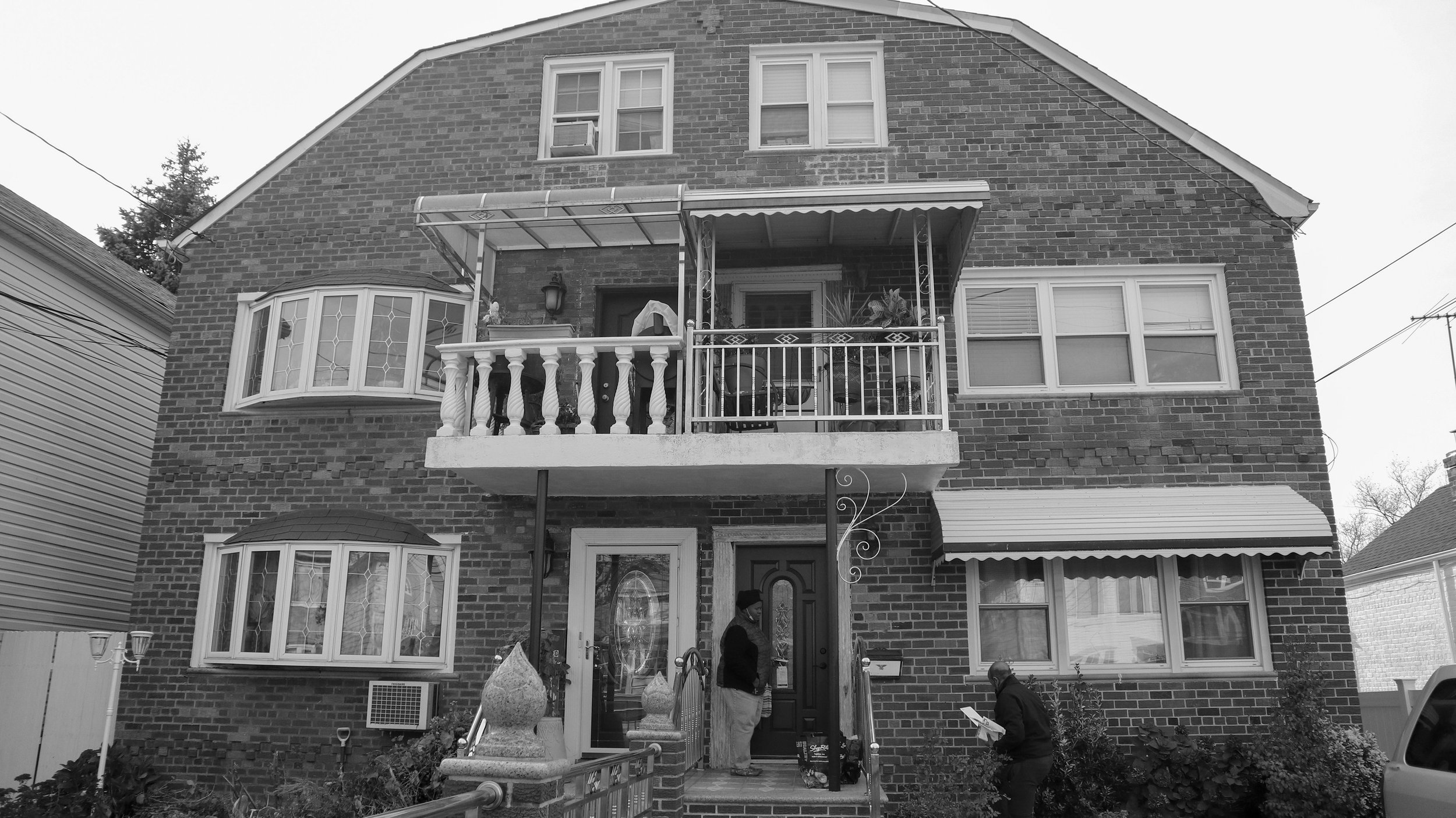
Jean Pascal (right) and his wife, Myrtho Noel (left) look through the mail before leaving their home. Among other errands, a goal is to buy more groceries and make a deposit at Western Union. These holidays are busier than usual for them, as they have more family members that need support.
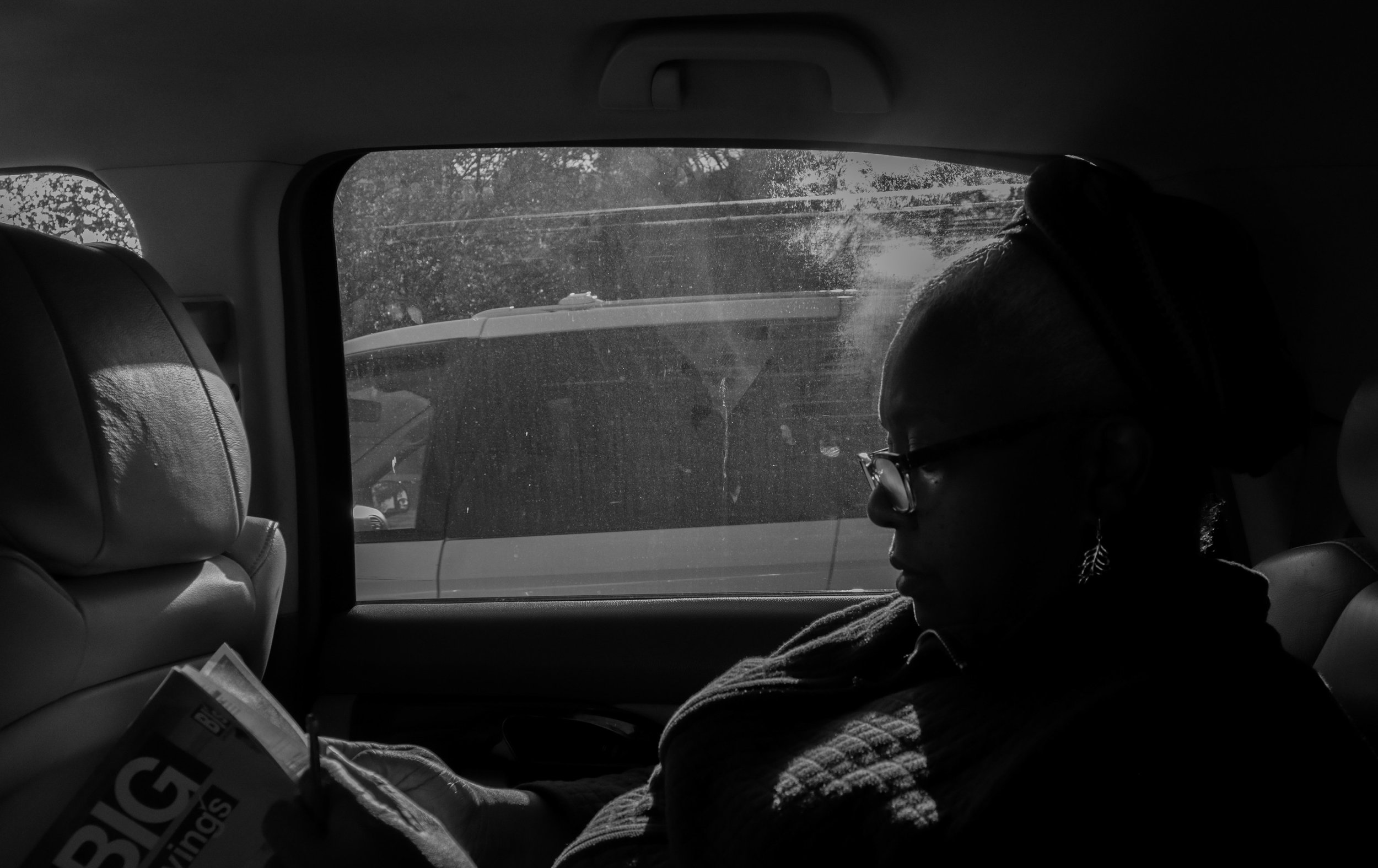
Myrtho sits in the backseat of the car, flipping through a magazine of BJ's coupons. The amount of items to purchase is substantial. Having a collection of coupons eases the burden and helps her save money when she purchases more essentials and perishables.

Myrtho waits outside a farmer's market for her son, Alain Pascal, and Jean. She hopes to find two large bags of jasmine rice and black beans to put inside the barrel being shipped to Haiti.
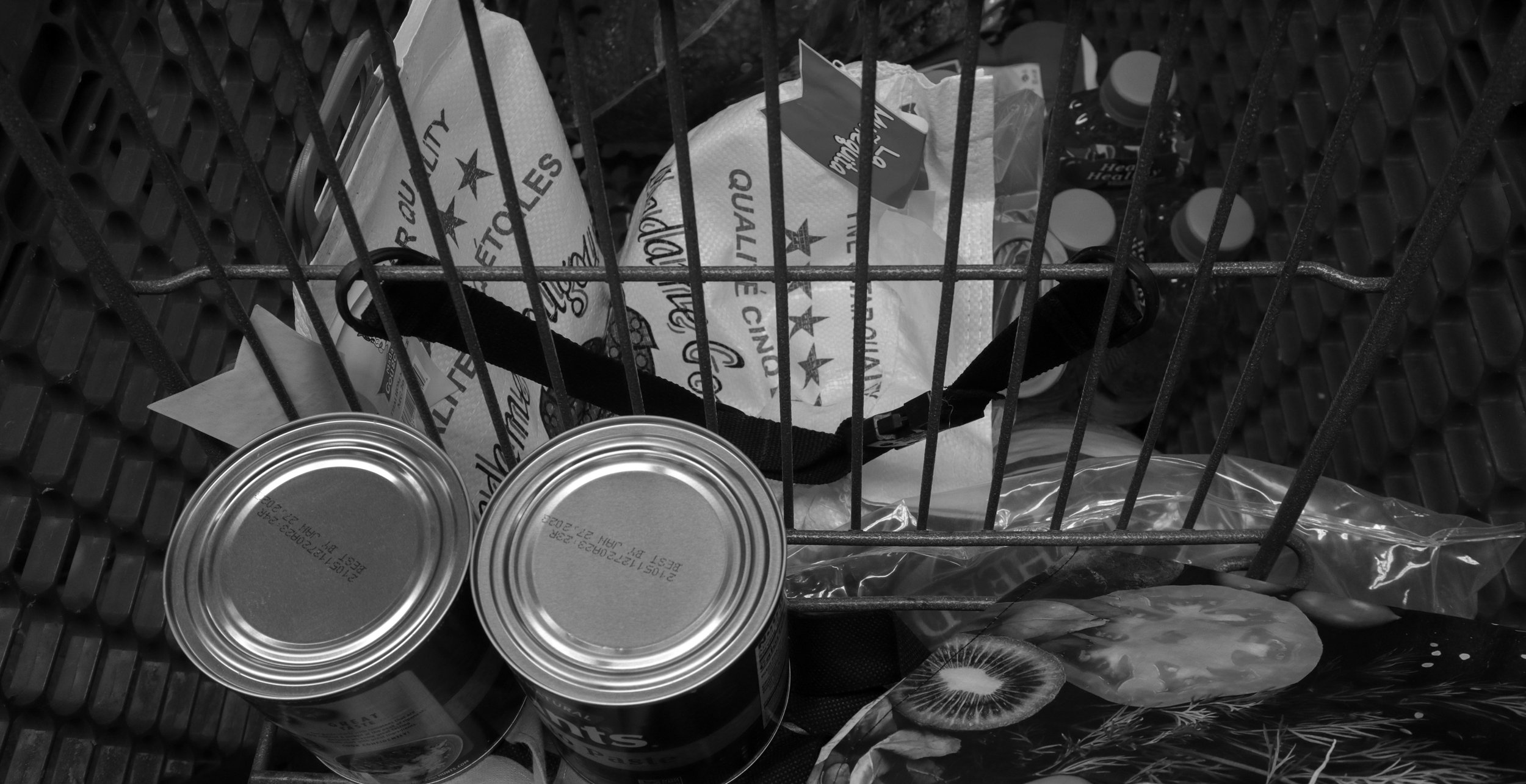
As Myrtho, Alain, and Jean wait in line, two bags of rice, tomato sauce, oil, and other items sit inside their grocery cart. The rice is for her sister-in-law, Esther, and her brother-in-law, Jacques "Michou" Michel-Ange.
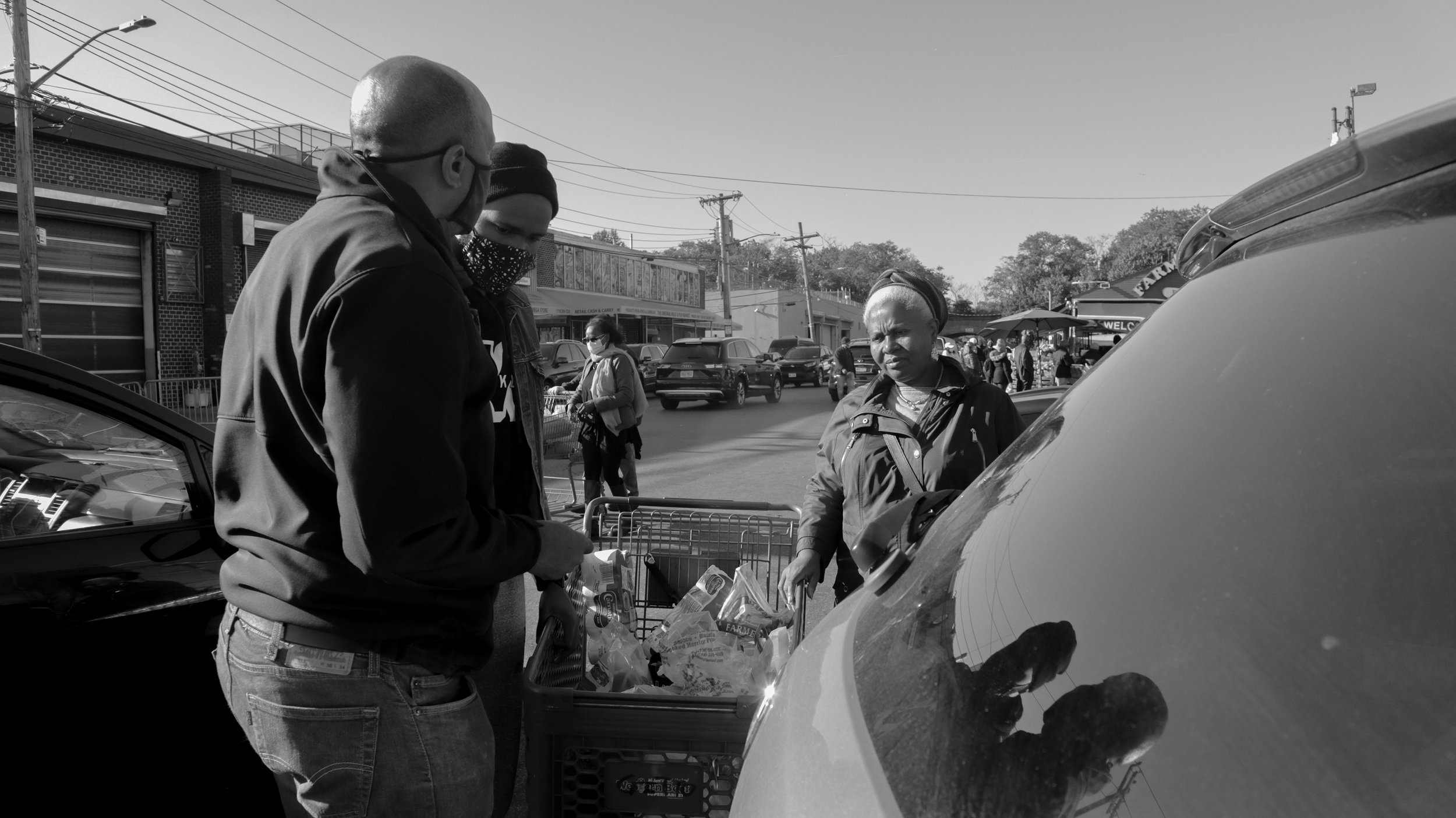
Jean, Alain (center), and Myrtho discuss how they will fill the barrel before heading home.

Myrtho and her niece, Cassandra, take out items from shopping bags. Myrtho has all of the items stacked on a staircase. Cassandra has her own collection of goods that will also go to her mother, Esther.

"Sa se pou pitit Michou," (this is for Michou's kids) Alain says. He hoped to find more to send to his younger cousins, but fear of food melting or becoming soiled made a container of chocolate milk powder and chips all he could send. Labeling the items ensures that family members know who each item is for.
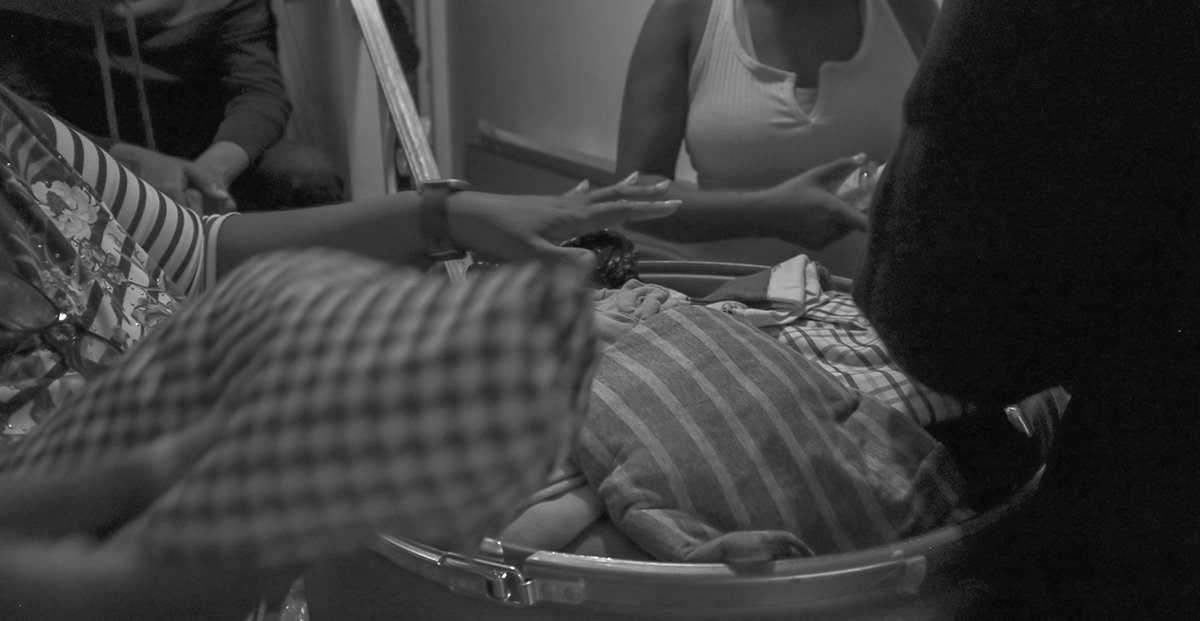
Myrtho, Cassandra, and Alain stack more clothes inside a second barrel. This one is filled with donated shirts, dresses, coats, and pants collected over the past few years. Along with their family members, the clothes will go to an orphanage their family supports in Jacmel.
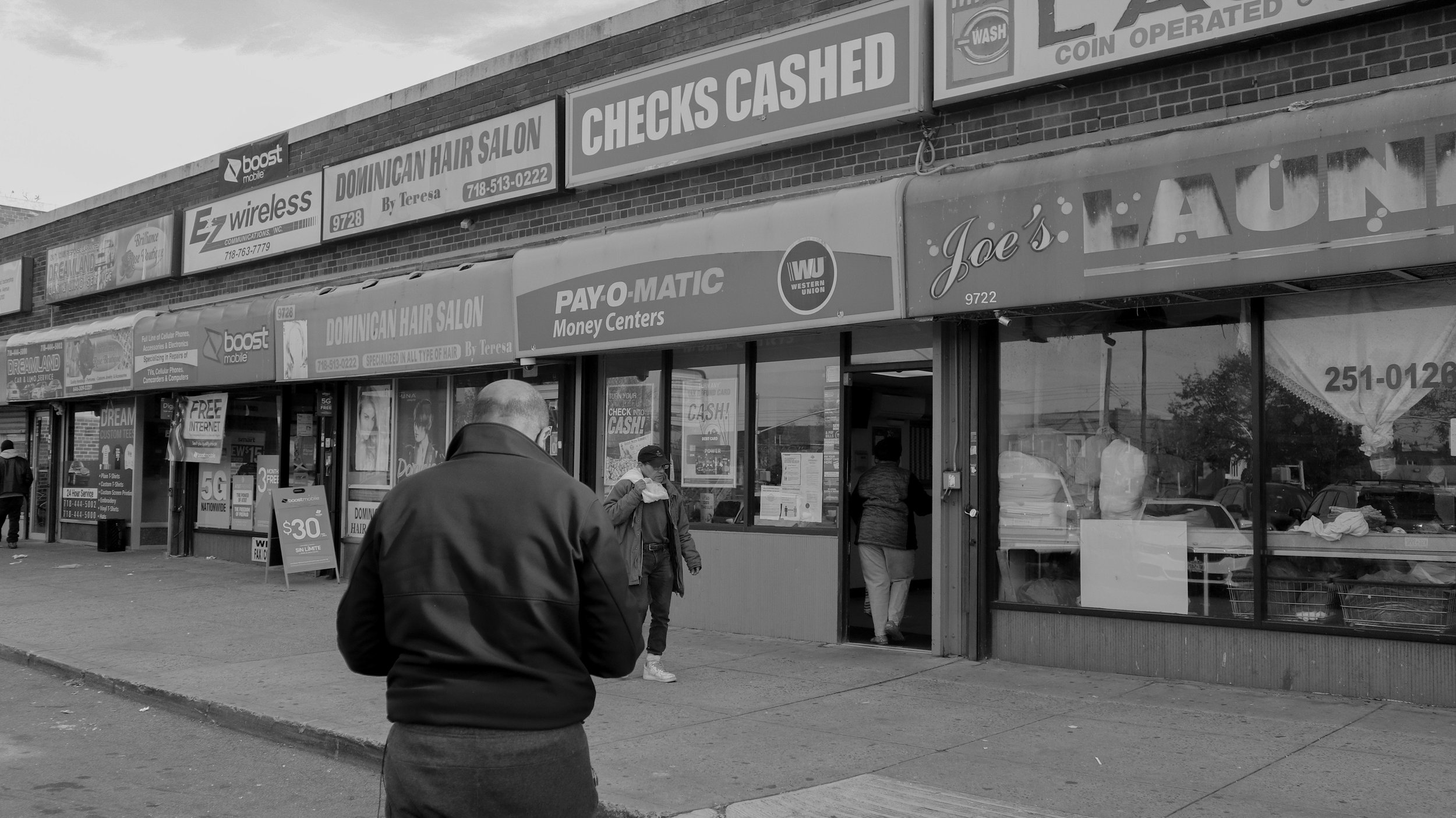
Jean and Myrtho enter a Western Union near their house. After the barrel is sent, they send money to family members, friends, colleagues, or whoever needs it in Haiti.
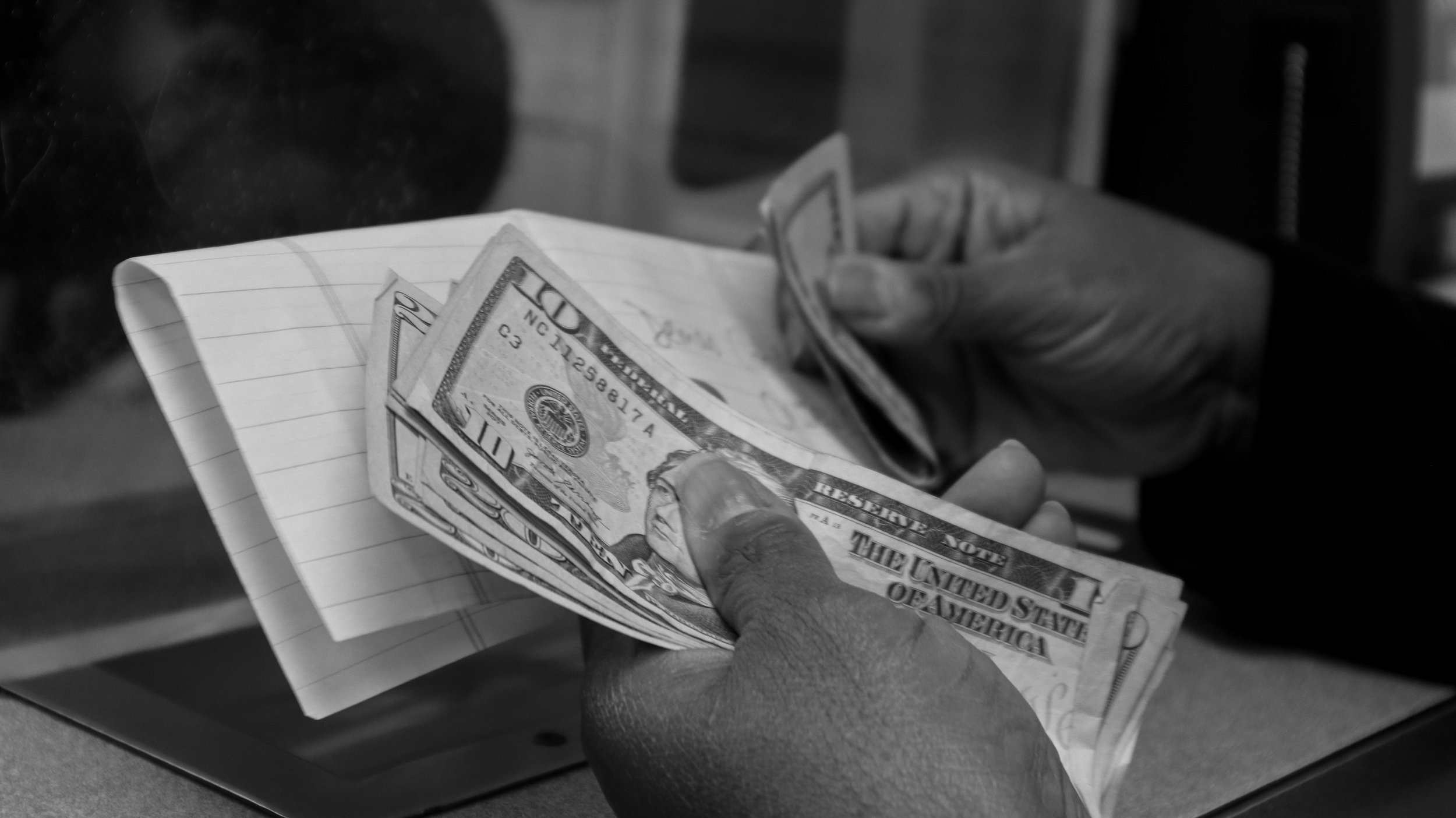
"I didn't bring my glasses," Myrtho says as she double-checks the spelling of Marléne Clotide, the recipient of these finances and a friend of the family.

Once the name is confirmed, Jean takes out more cash to hand to Myrtho as she makes the final transfer with a cashier.
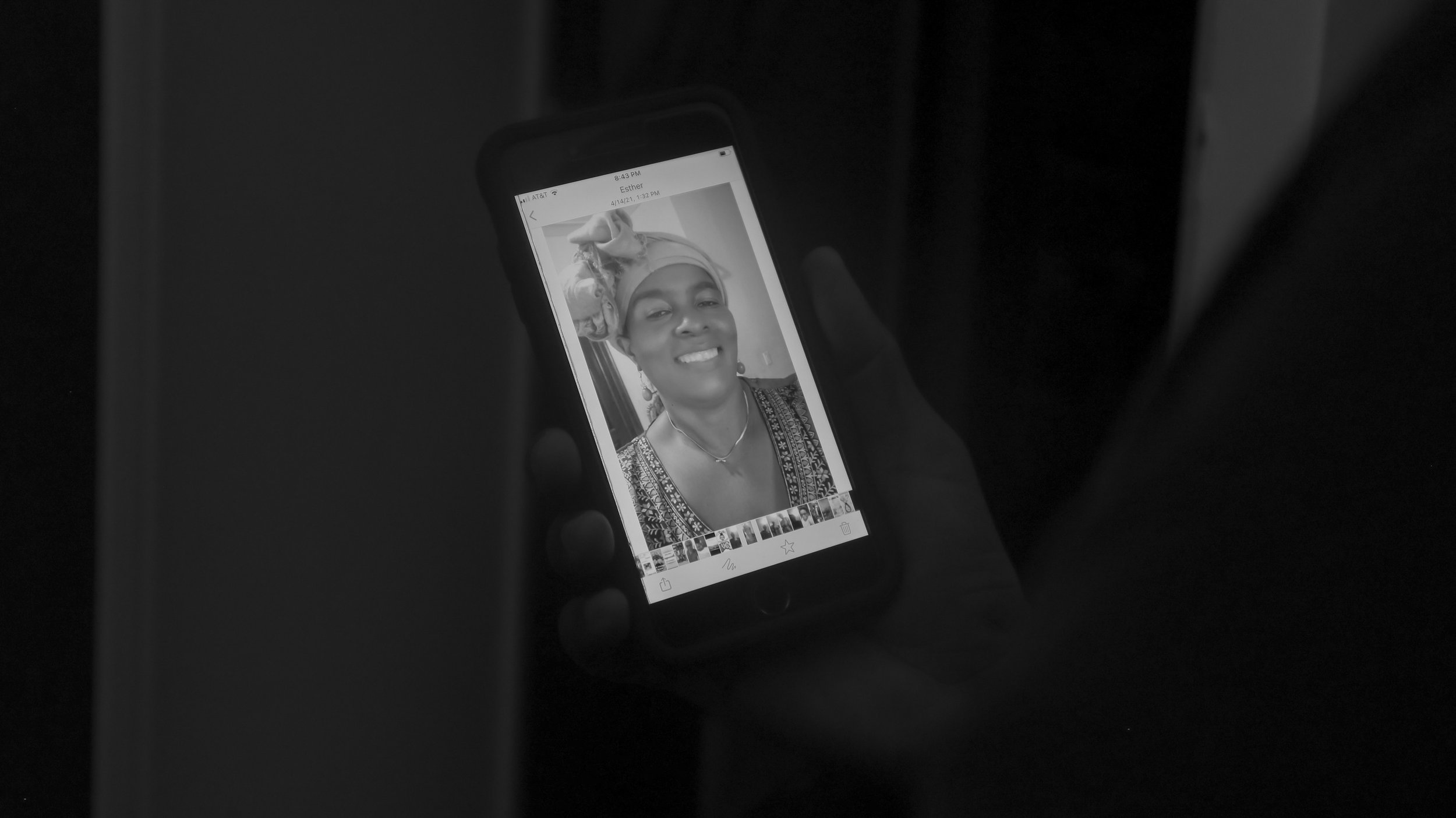
"No, this is a better one." Jean shows me a photo of his sister, Esther, he saved in his phone. If it arrives early, she will receive barrels of perishables and clothes right before Christmas.
The Haitians from Canarsie
A photo essay for The Long Island Advocate.
2021:
The value of taking care of family is the first lesson I learned from watching my parents. I grew up in Canarsie, a residential neighborhood in Brooklyn, NY. As a child, I’d watch my dad take a phone call, smiling wide as he talked to his siblings still living in his native country. Just as their conversation would end, he’d go to my mother and discuss what they needed and how we could give it to them. It didn’t matter if we didn’t have much money of our own at times; my parent’s belief and main prayer was that God would provide. And by some miraculous miracle, their prayers would always be answered. Filling up barrels and going to Western Unions on the ride to school in the mornings was a normal part of my life, especially given the turmoil and natural disasters Haiti endured in this past decade alone. As we watched from Brooklyn, the more my parents would pray for God to help them take care of those back home. As I’ve become more involved in that process, I decided to capture it in this photo essay.
This year, Haiti faces another crisis. The assassination of President Jovenel Moise and a devastating earthquake leaving thousands dead has left the country in a state of political instability and violence. Haitians have been leaving the country for several years, seeking refuge in South America. However, for many Haitian migrants, recent economic issues and laws made it difficult for them to stay. The U.S.-Mexico border was initially deemed a safe place; yet, rather than a refuge, Haitian migrants were met with violence, forced deportation, and inhumane behavior by border officials. What makes the situation more saddening is that for many of these Haitian migrants, their arrival at the U.S.-Mexico border was a culmination of a nearly decade-long journey. For those forcibly deported, they returned to a country they had not seen in years. It is treatment perpetuated under the public health order Title 42, a policy used by former President Donald Trump. (Currently, it is upheld by the Biden Administration) The policy calls for the expeditious removal of migrants, with their justification being that the spread of the coronavirus would be slowed by deporting immigrants instead of detaining them at the border.
This situation at the U.S.-Mexico border and in Haiti has affected my family in several ways. Because of this, the efforts to support family members in the country felt even more essential. On November 6, 7, and the 20th, I documented my family’s process of preparing a barrel of essential items, buying and storing perishables, and sending financial aid to family members and other loved ones in Haiti. I wanted to document something I’ve been a part of for my entire life, showing how Haitians in Brooklyn care for their loved ones back home. That goal was my guide as I began this essay, and though it is finished, it is something I hope to continue documenting in the future.